Background
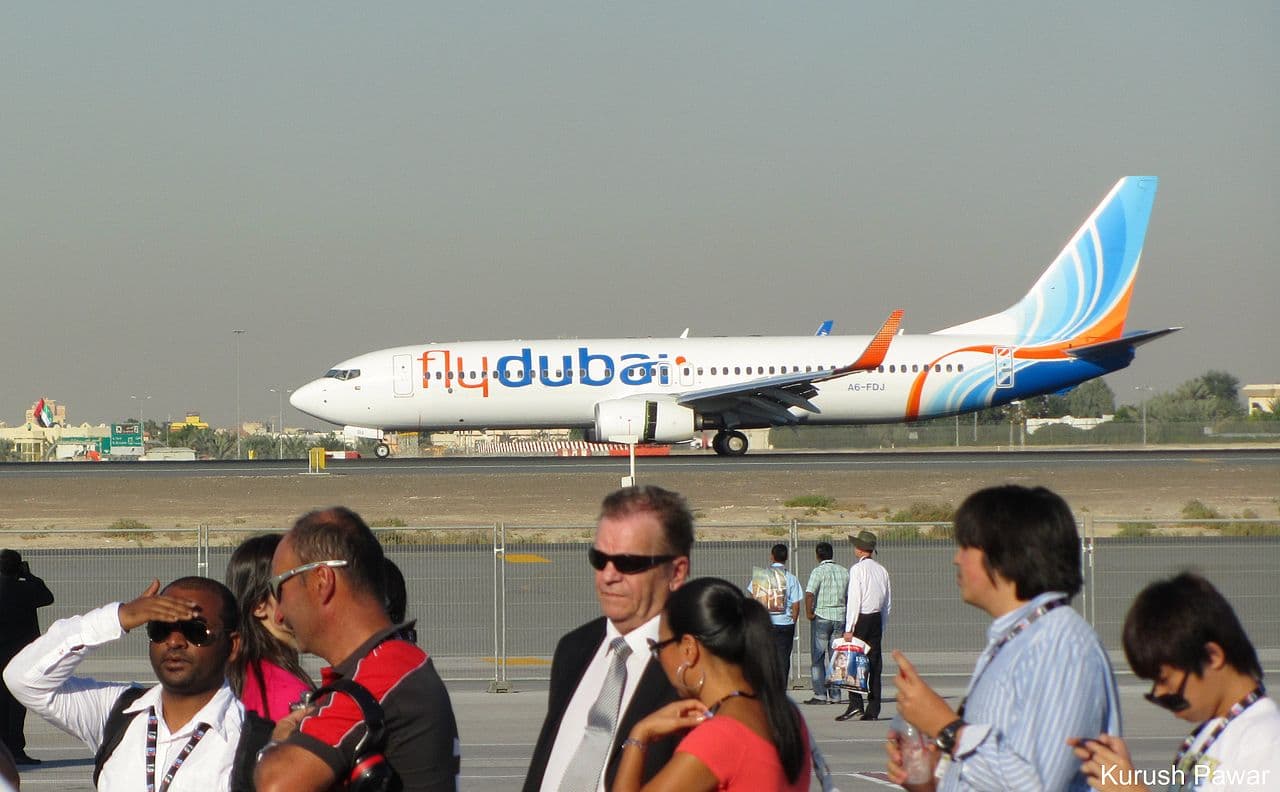
FlyDubai was seeking to expand its services by venturing into the holiday booking solution. This involved providing a platform for customers to not only book flights but also plan and book their entire holiday — including accommodations, activities, and other travel essentials.
Objectives
Provide a one-stop platform for customers to plan and book their holidays, including flights, accommodations, and activities.
Increase average booking value by bundling flights with holiday packages.
Enhance customer engagement and satisfaction by offering a comprehensive holiday booking solution.
Key Features
Integrated Booking System A user-friendly platform that allows customers to book flights, accommodations, and activities in one place.
Customization Options The ability for customers to personalise their holiday itineraries based on their preferences.
Collaboration Tools Features that enable group travel planning and coordination.
Payment Integration Seamless and secure payment processing for all bookings.
Research
Discovery
Where Are We Today?
The first step was to understand the current state of flight booking in Middle Eastern countries and the reasons behind FlyDubai's interest in transitioning to a comprehensive holiday booking platform. We held multiple remote meetings with the FlyDubai team — including a project manager, management, the marketing team, customer service representatives, and the technical team.
Initial Research and Discovery
Thorough understanding of FlyDubai's objectives, target audience, and market positioning — reviewing existing documentation, conducting stakeholder interviews, and gathering initial user research data.
Defining the Problem
Identifying key problems and challenges the platform needed to address — articulating clear problem statements that would guide the entire design process.

Opportunity areas and defining success — research synthesis framework
Competitive Research
Secondary Research — Competitor Analysis
Conducting secondary research on competitors was crucial for understanding the market landscape and identifying opportunities for differentiation. We identified major competitors in the travel booking industry focusing on the Middle East and globally — both direct competitors (other airlines with booking platforms) and indirect competitors (general travel booking websites).

Competitive analysis — feature matrix comparing direct and indirect competitors
Define
Personas
User Personas
The creation of user personas was a crucial step in ensuring the Holidays platform met the diverse needs and preferences of its target audience. By developing detailed personas, we could tailor features and design to resonate with users' goals, behaviours, and pain points.
Kiaan — The Adventurer · Leisure traveller, Middle East, spontaneous and experience-driven
By creating these personas, we were able to align the platform's design and functionality with the distinct needs and expectations of our users. This persona-driven approach enhanced user satisfaction and enabled FlyDubai to effectively cater to a broader audience.
Workshop
Brainstorming and Ideation Workshop
To foster idea generation and collaboration, we organised a two-day workshop involving stakeholders from both FlyDubai and the Imaginea team. The workshop aimed to set the context, create detailed user flows, and identify key opportunity areas.

Two-day ideation workshop — Dubai, 2016
Ideation workshop sessions — collaborative activities, user flow mapping, and brainstorming
At the end of the workshop, we reviewed and discussed findings and proposed user flows with the FlyDubai team. This collaborative effort allowed us to align on a shared vision and finalise the approach for the next design steps.
Journey Mapping
Defining User Journey
To ground our ideas in reality, we mapped out user journeys simultaneously with the ideation process — ensuring personas' paths were aligned with both stakeholder business goals and the creative concepts generated during brainstorming.

User journey map — from holiday inspiration to post-booking experience
Design
Design Principles
Design Principles

Focus on Users
As FlyDubai transitions into a one-stop holiday platform, understanding and prioritising the needs of diverse users — families, adventurers, travel agents — ensures each group finds the platform valuable and easy to use.
Clarity of Information
Presenting clear information about flights, accommodations, packages, and services is essential. Users need to quickly grasp the options available, benefits of each choice, and associated costs — reducing frustration and abandonment.
Clarity of Process
Users should easily navigate through planning, selecting, and booking holidays without confusion or unnecessary steps. Clear process flows enhance user confidence and streamline the booking experience.
Easy Comparison
Offering easy comparison for flights, hotels, excursions, and services allows users to weigh options effectively — helping them quickly find the best options that meet their needs.
Helpful and Relevant
Whether through contextual tips, FAQs, customer support, or personalised recommendations, timely and relevant assistance builds trust and reliability — encouraging users to return for future bookings.
Application Design
Application Designs

Screen flows — key application journeys from search to booking confirmation
Wireframes
Wireframes
Home page — hero section with immersive destination imagery and search widget
Visual Design
Visual Designs
Visual design — Homepage and search
Responsive & i18n
Responsive & Internationalisation

Responsive design — adapted layouts across desktop, tablet, and mobile

Internationalisation — English LTR and Arabic RTL layout adaptations
Usability Testing
The usability testing for Holidays by FlyDubai was a rigorous research initiative conducted at the FlyDubai premises to evaluate the platform's performance through the lens of potential users. Findings were formally presented to FlyDubai stakeholders and used as a primary roadmap to further refine the application's interface and user flows.
Preparation
Pre-Testing — Setup & Preparation
The research team comprised me and 3 other senior members of the Design team. Before engaging with participants, we developed a comprehensive suite of artifacts and conducted pilot testing to ensure study validity.
Pre-testing artifacts
User Screening A formal Screener used to recruit 40 frequent or potential travellers.
Moderator Scripting Detailed scripts created to ensure consistent briefing and scenario delivery across all sessions.
Pilot Testing A dedicated 'Day 1' allocated for setup and a pilot test to refine task scenarios before full-scale execution.
Pre-Test Questionnaire Administered to capture user profiles, tech affinity, and existing travel habits.
Execution
Research Execution & Participant Overview
The core testing was executed over four days, with the research team divided into two UT teams — each with one moderator and one observer/logger — to maximise efficiency.
Users Recruited
Frequent or potential travellers screened and recruited
Active Participants
In-person sessions completed after 4 no-shows
Problem Areas
Distinct issues uncovered across the booking journey
Major or Critical
Of identified issues requiring immediate design iteration

Usability testing records — participant breakdown across 4 testing days

UT results summary — 35 problem areas categorised by severity level
Refinement
Strategic Design Refinement
Key refinements from UT findings
Mental Model Correction The design team focused on clarifying the 'Holiday' package concept (flights + hotel) vs. standalone services — a persistent point of confusion for users.
Simplifying Complex Flows Based on high error rates, the team prioritised re-engineering the Room Selection process — identified as the most complex part of the user journey.
Pricing Transparency The interface was refined to ensure users no longer misinterpreted the total package price as an exclusively hotel price.
Conclusion
Designing the FlyDubai Holidays experience was a defining moment in my career, marking two significant firsts: my entry into large-scale B2C product design and my introduction to rigorous usability testing.
Key learnings
B2C demands a higher standard of intuitive design Unlike B2B work — where users are often subject matter experts or receive training — B2C must accommodate a vast spectrum of digital literacy and cultural contexts. The interface must be resilient enough to serve millions, not just the 'ideal' user defined in research.
User patience is thin — clarity is king Sitting across from actual users and watching them interact with designs was a profound reality check. In the B2C space, even small moments of confusion lead to abandonment.
Designing for human behaviour, not screens This experience fundamentally shifted the approach — from designing for screens to designing for the way real humans think, feel, and make decisions under real conditions.
“Sitting across from actual users and watching them interact with my designs was a profound reality check. It taught me that in the B2C space, user patience is thin, and clarity is king.”— Debashish Sahu, Interaction Designer
