Problem Space
Context
Context and Opportunity
The Indian apparel retail market is undergoing a massive digital shift. While e-commerce offers convenience, it lacks the tactile experience and personalisation of local boutiques and bespoke designers. However, local retailers struggle to compete with the “one-click” ease of global online giants, often failing to reach or retain customers in a fragmented physical market.
Zakoopi was envisioned as a hyper-local discovery platform designed to bridge this Online-to-Offline (O2O) gap — empowering Indian apparel retailers with intelligent marketing while offering consumers a trusted way to discover local fashion.
Challenge
Design Challenge
Retailers are finding it increasingly difficult to acquire and retain customers in an era of digital distraction. For the consumer, finding a high-quality local designer, boutique, or tailor is often a matter of trial and error or word-of-mouth — which is not scalable.
Core UX objectives
Centralise a fragmented database Build a searchable, user-friendly interface for discovering designers and tailors.
Build trust through social proof Integrate a community-driven rating and review system.
Seamless discovery-to-visit flow Works across both web and mobile platforms without friction.
The primary objective was to design a web application specifically for users in need of customised and tailored wear. The challenge lay in creating a platform that not only catalogues designers but also serves as a social medium for fashion enthusiasts and experienced shoppers to interact directly with designers and boutique owners.
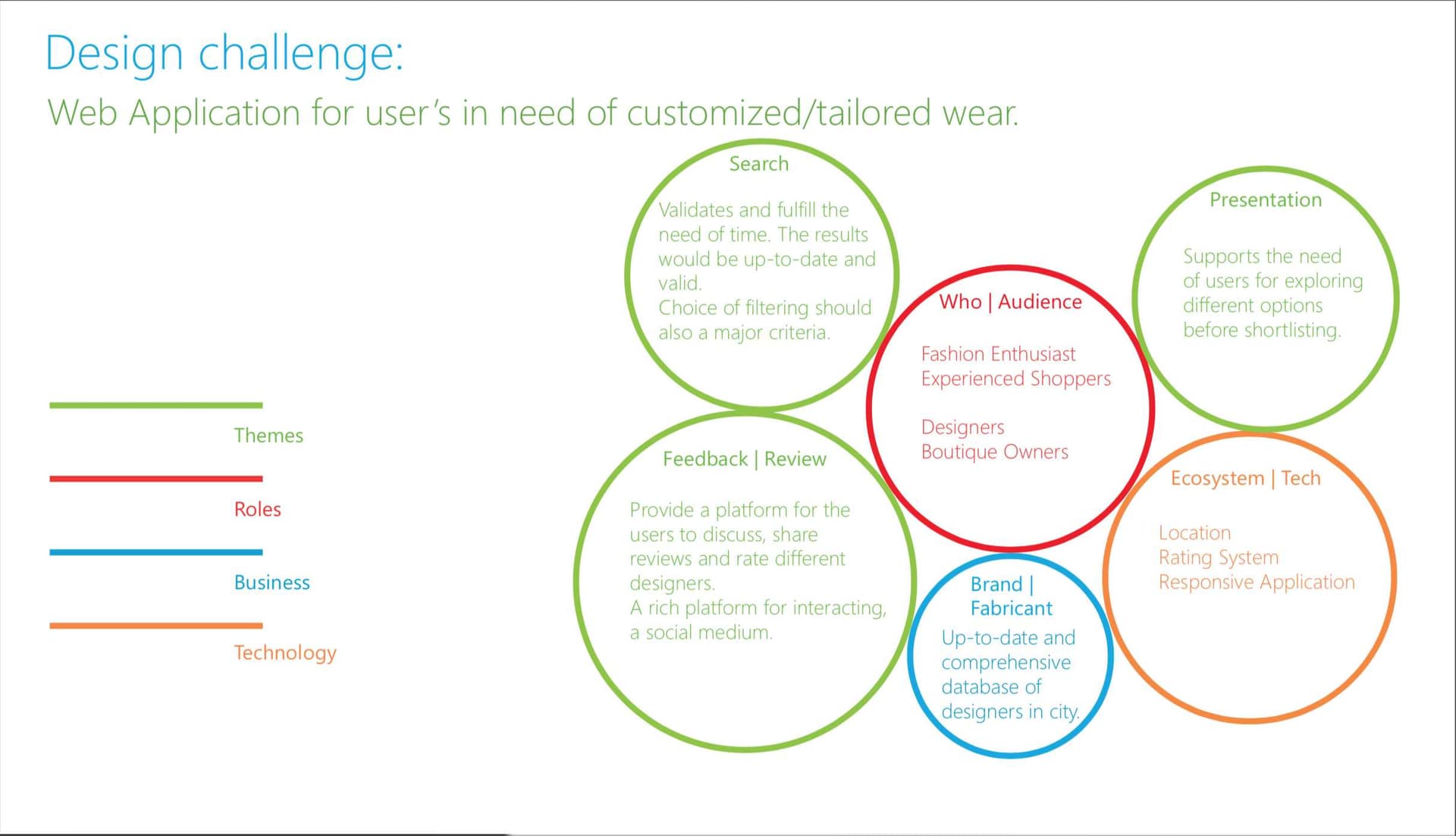
Design challenge — bridging the Online-to-Offline gap in Indian apparel retail
User Research
Field Research
Gorilla User Research
The foremost challenge was to identify user groups, understand how they think, and learn their opinions around tailored wear. The only way to find out was to talk to real users.
To do this, me and 2 stakeholders prepared a set of questionnaires targeting users. The questions served two purposes — to float online in our friend circle and to conduct in-person user interviews. We travelled across Delhi's malls and major fashion streets to get hold of users who had come out for shopping. Interviews were kept short and minimal to avoid users losing interest.
Within a week we covered several major locations:
Research locations — Delhi
Sarojini Nagar Market — popular for affordable tailored fashion
Shahpur Jat Market — known for boutique designers and independent labels
Promenade Mall — mid-to-premium retail, mixed shopper profiles
The collected information gave us rich insights to create user personas and map different touch-points across the discovery and purchase journey.
Personas
User Personas
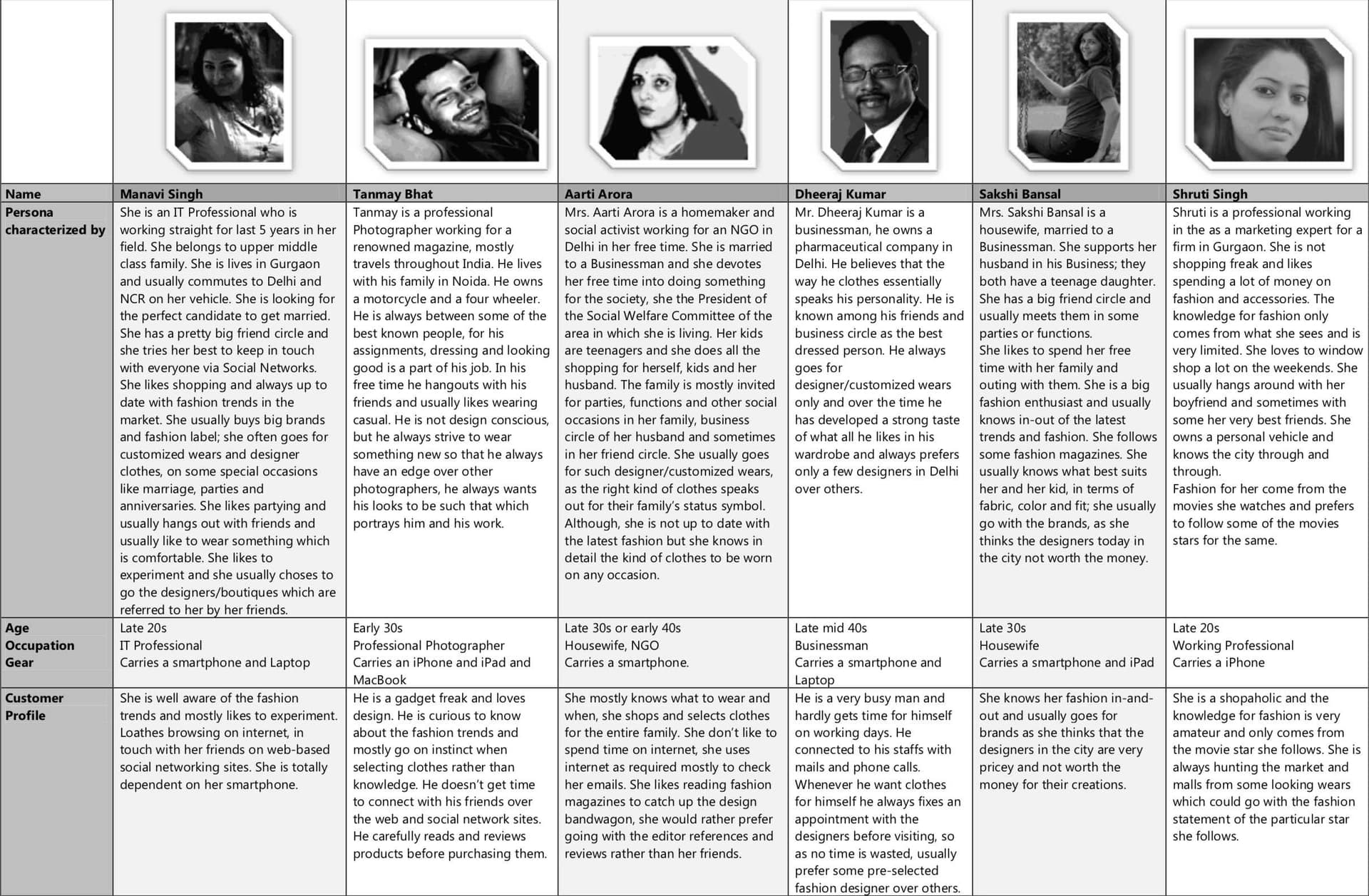
User personas — developed from gorilla research across Delhi markets
Research Synthesis
Overview
Creating an Overarching Picture
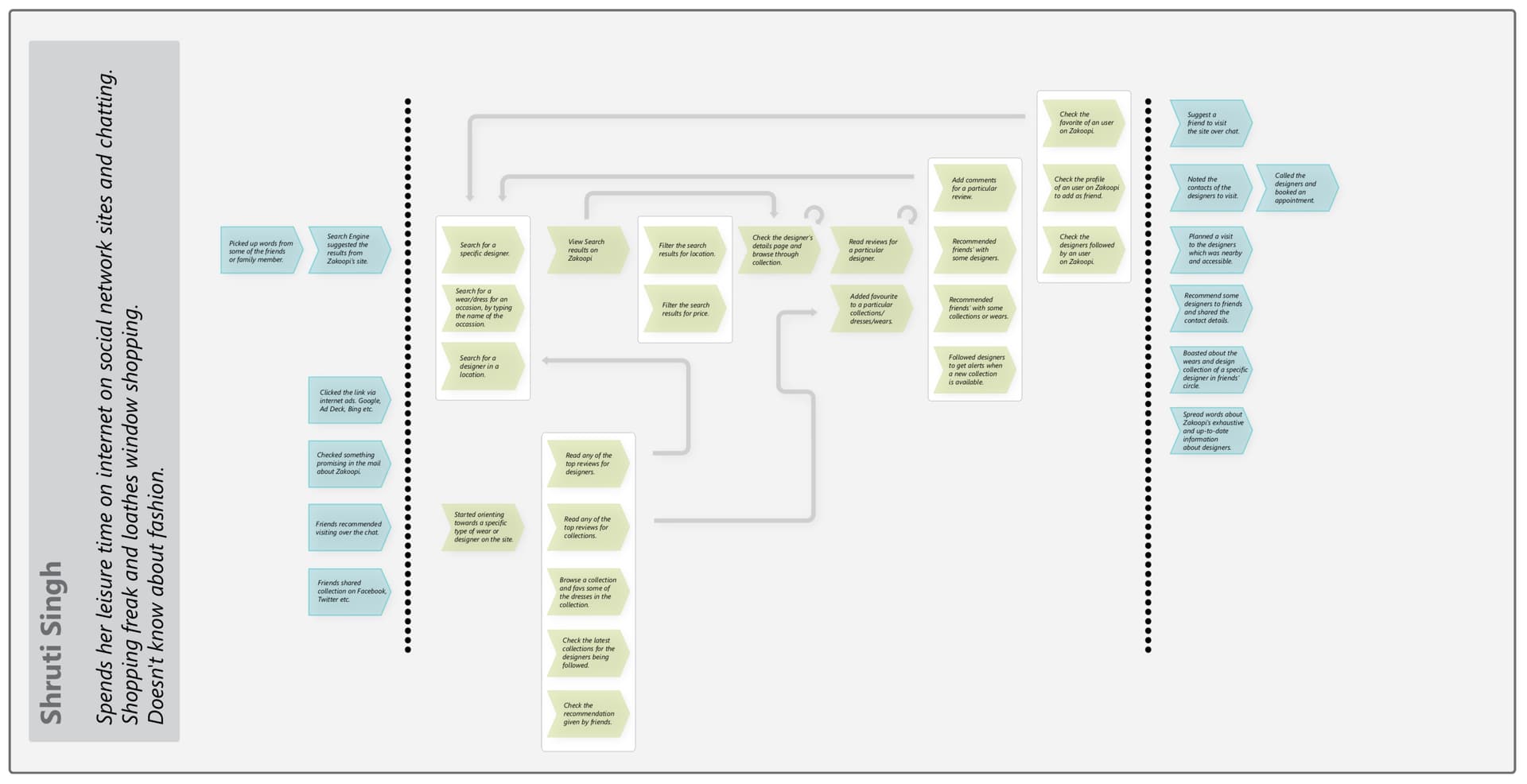
From the field research, a detailed user journey of the entire use-case was mapped out with appropriate touch-points against a hypothetical system for the to-be web application. Emphasis was placed on what information should be provided to the user and what the business viability of each decision was.
Journey
User Journey Map
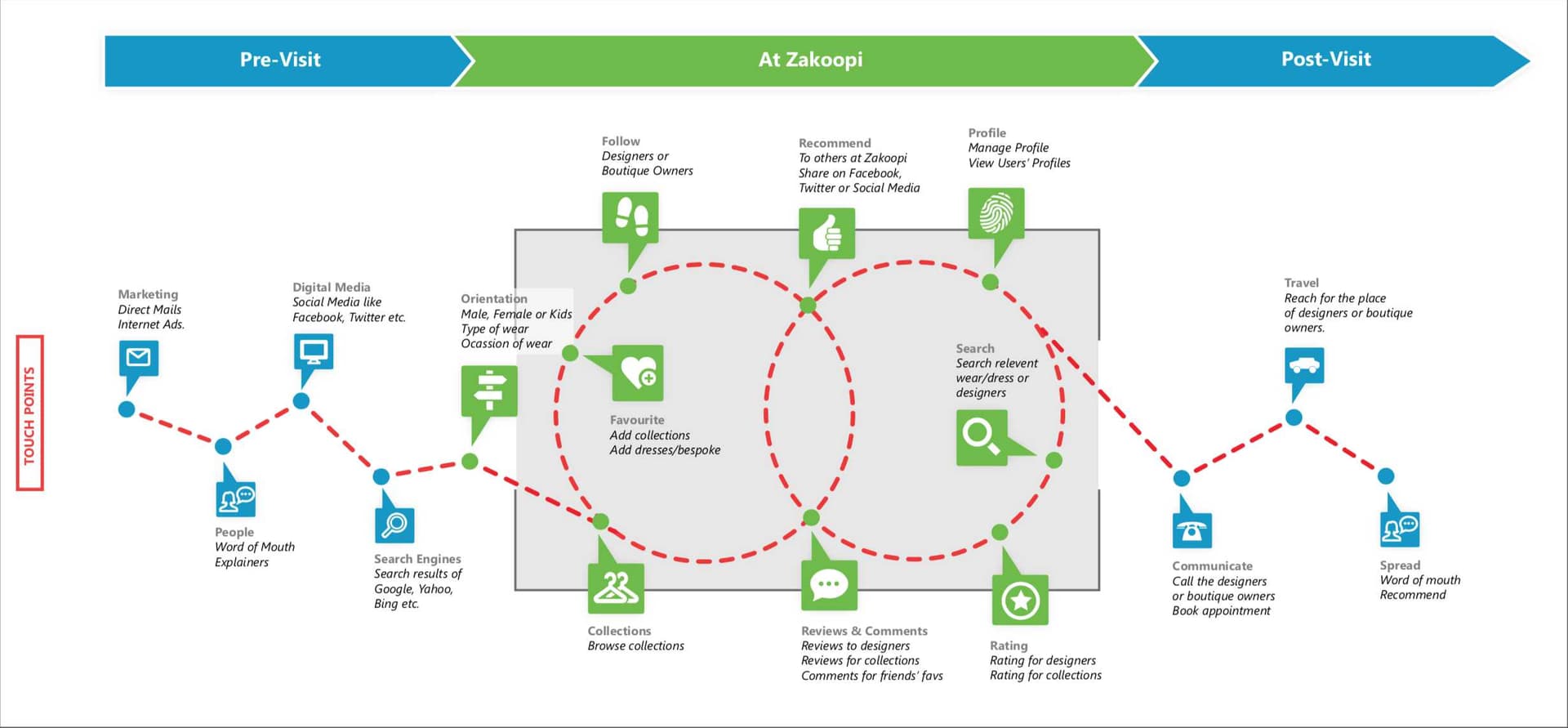
User journey map — from fashion discovery to store visit and review
Ideation & Solution
Structure
Application Flow & Design
As the end product was a website, ideation was done based on the entire structure and flow of the application — mapping the different pages and interactions.
Ideation was based on different flows for the zeroed-down user personas. The starting flow was basic — only key important actions listed. The flow was fleshed out with subsequent iterations and discussions with the 2 key stakeholders.
Information architecture decisions
2-level deep IA Kept deliberately simple — Homepage → Search Results → Shop Details. No unnecessary depth.
Two primary page templates Search results page and shop/boutique details page cover all user needs.
User Flows
User Flows
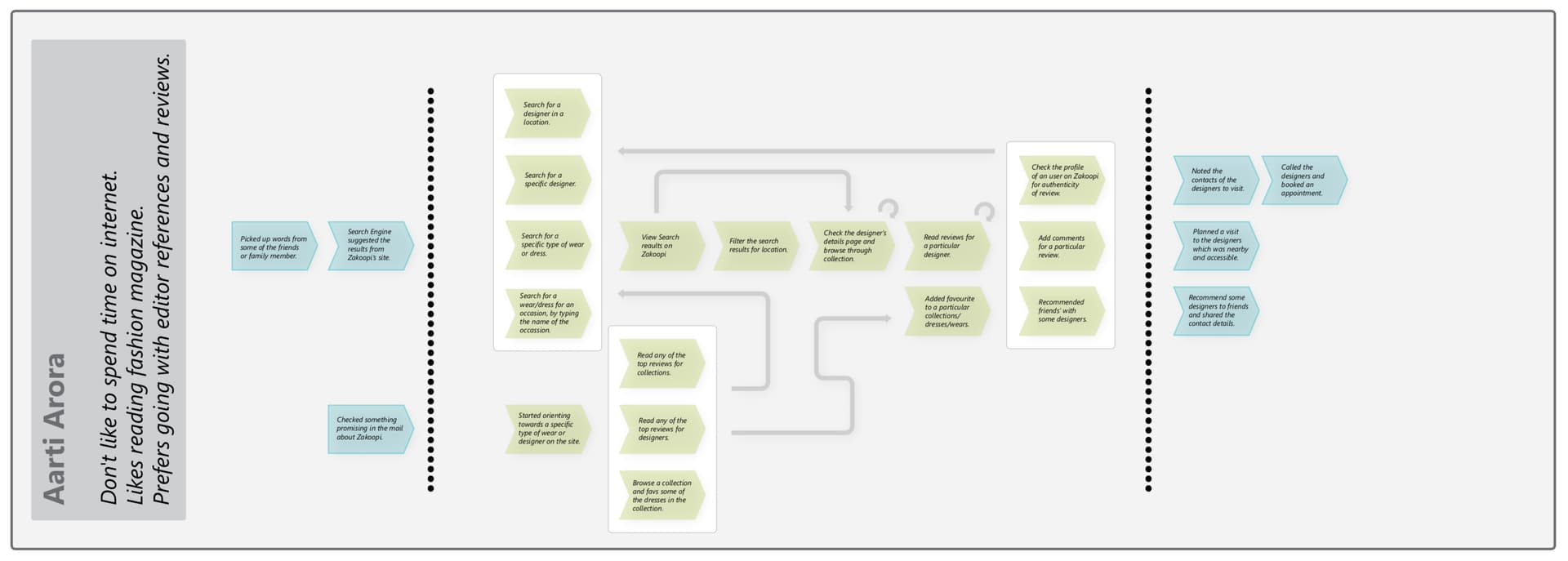
User flow 01 — discovery and search journey
User flow 02 — boutique details and review flow
Wireframes
Web Design — Wireframes
Wireframes were developed for both the search results and boutique detail page templates — the two building blocks of the entire platform.
Wireframes were delivered for both primary page templates — search results and boutique details. The output was well received by stakeholders who requested visual designs as well, which could not be completed within the project timeline.
Wireframe Document
Page-level wireframes for the two primary templates — search results and boutique details — covering layout, hierarchy, and key interactions across the Zakoopi web application.
Loading document…
Conclusion
Reflections
First web application project This was my very first project designing a web application — done as a freelance project during the final semester of my PG at NID. Challenging in its own way, though the research part was familiar from NID classroom projects.
Responsive design was new territory Responsive web apps were a fairly new concept in 2013 — significant time was spent understanding how responsive web applications work before the design could progress.
Stakeholder satisfaction The output was well received. Stakeholders wanted visual designs as well but time constraints prevented it. The web application was launched in the second half of 2013.
“Responsive web apps were fairly a new concept at the time — there was a lot of time spent understanding how the responsive web application works before the design could progress.”— Debashish Sahu, Freelance Designer